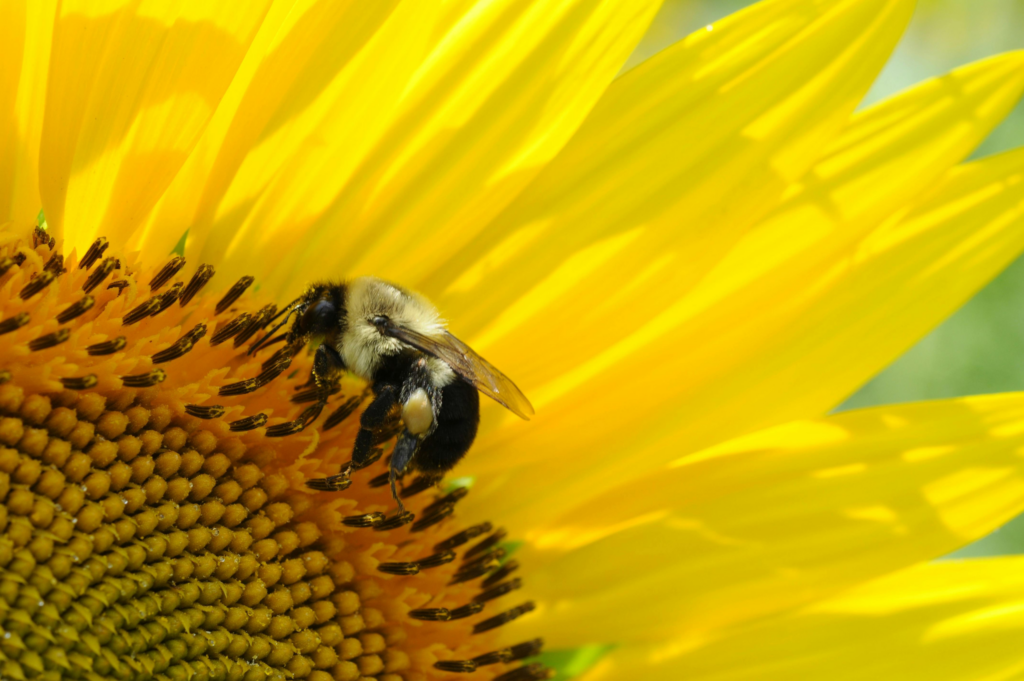

A while back, I posted a question and 70% of the responses (across my Facebook and Instagram platforms) had the wrong answer! My question was, “What remedy would you give for an average bee sting that causes ‘normal,’ not serious symptoms?” And the options I gave as possible answers were 1. Apis mellifica and 2. Ledum palustre.
And I get it! Apis and Ledum are two remedies that notoriously get mixed up, especially when considering bee stings. So for the month of March I am excited to compare and contrast these two remedies to help you own each of them a little bit better.
Apis mellifica
Apis mellifica is made from the body of a honey bee, including the venom, and this connection often misleads people into thinking it should be the first remedy to consider for bug bites and stings. It always bums me out when someone immediately reaches for Apis the moment a bug bite shows up because, in truth, it’s often not actually indicated.
Apis is incredible when it’s the right match, but here’s the key:
It’s for bites or stings that result in large, puffy swelling. And we are talking about water balloon swelling, not just a ‘big mosquito bite bump.’ Along with that swelling, look for itching and stinging pain. The skin is often pink, hot, and stinging, and the person might not even want to be touched. The swelling should also come on rapidly. Apis is a fast-acting remedy, which means the symptoms should come on quickly as well.
A few years ago, a friend of mine was out camping in Texas when she accidentally brushed up against an asp—a fuzzy little caterpillar that may look harmless, but is actually highly venomous. The pain and swelling were intense, and medical help was far away.
In that case, Apis was spot on. The symptoms fit—severe swelling, burning pain, pink puffy skin—and the remedy brought fast relief. For a bug bite or sting that is going in the wrong direction, the sooner you can take Apis, the better.
So yes, Apis can be amazing, but it’s not a go-to for every itchy bite. If the swelling is minor or the sensation doesn’t match, it’s probably not Apis.
Outside of the realm of bug bites/stings, Apis is an amazing first-aid remedy for anaphylactic shock due to any kind of allergic reaction. It is great for hives, very LARGE swelling, stinging, or itching. We are looking for really big swelling…it can be where you got stung, or if you’re having an allergic reaction to food, your throat will swell up.
This remedy can actually help abort the symptoms of anaphylaxis! I have a friend whose granddaughter is highly allergic to milk. Her granddaughter came into contact with milk at a park when the family was gathered. Dad was sprinting to the car to get the EpiPen, but my friend had Apis with her, gave it to her granddaughter, and the symptoms melted away.
If you are so allergic to something that you might go into anaphylactic shock, Apis is a smart remedy to always carry with you. For these types of severe reactions, I would recommend going up to a 200c or even a 1M in potency.
And while treating allergic reactions is where Apis really shines, the symptom picture for Apis can be seen across other body systems as well. For example, in women’s health, Apis may be indicated if there is a lot of water retention before periods, including puffy eyes and face, and a tendency to develop UTIs/yeast infections with stinging, burning pains. Apis is markedly better for cold applications or open air and is worse from heat.
Ledum palustre
Let’s talk about Ledum palustre—an awesome remedy made from a plant with clusters of tiny white flowers in the Ericaceae family, commonly known as Marsh Tea or Wild Rosemary. This remedy should be your go-to remedy for bug bites and stings. Why? Because Ledum is homeopathy’s premier remedy for puncture wounds made by sharp points—and what’s a bug bite or sting if not exactly that?
One of its amazing qualities is that Ledum has a history of stopping the spread of infection or venom when used. And since this is always a risk for puncture wounds of any kind, it makes Ledum perfect for the job.
The area around the puncture site will be hard and blanched or even bruised a bluish-black/violet color. It may also feel cool to the touch and subjectively cool to the injured person. Swelling will also usually be present, just not to the extent that you would see in an Apis situation.
If a bug bite or sting occurs, and no indication of an allergic reaction is present, Ledum should be the first remedy you consider. While not exhaustive, other potential puncture wounds to keep in mind are animal bites, nails, sewing needles, splinters, injections, and staple guns. The potential applications for Ledum are endless.
I had a momeopath share an awesome story with me. She had a cat bite turn into a nasty infection, but instead of reaching for antibiotics, this mom reached for her homeopathy kit. With a combination of Ledum for the puncture wound and Hypericum for the pain, she saw her hand heal—and the best part? Just a year ago, she knew nothing about homeopathy. Now she’s confidently caring for her family.
Another extremely useful application for Ledum is tick bites. Some moms (understandably) feel very anxious after a tick bite, so—after consulting with Dr. Ron Whitmont, a second-generation homeopath practicing in tick-heavy Upstate NY—I follow a grounded approach that has worked for me time after time.
First, after properly removing the tick, simply squeeze some of that clear serum out. Then, take Ledum 200c—just one dose after tick removal. If 200c isn’t available, use 30c—one dose immediately, another 12 hours later, and a final dose 12 hours after that (total: 3 doses max). Finally, cover with raw honey and a bandaid. Switch the bandaid out with more fresh honey several times a day for the next few days.
(This added honey trick is one I use on all my puncture wounds to prevent infections—whether it be a tick bite, wasp sting, or stepping on a nail!)
I’ve also seen Ledum work well for a black eye after my son got elbowed during a basketball game. While not a puncture wound, the symptom picture matched—the injury was hard, bruised in color, and cold to the touch. Similar to Apis, Ledum injuries are better from cold applications, and a nice ice pack brought great relief.
Bee Stings
So let’s bring it back to my original question and consider the symptom picture of each remedy when applied to a bee sting.
“What remedy would you give for an average bee sting that causes ‘normal,’ not serious symptoms?”
Hopefully, by now, you won’t be surprised to learn that the correct answer to this question was Ledum. It’s a bit of an oversimplification, but based on the symptoms and remedy options provided, Ledum is the best fit.
I did get one comment that was honestly my favorite:
It depends on the symptoms as there are no ‘normal’ symptoms. One person’s normal response is abnormal to another. Some possibilities to look at are Apis, Belladonna, Ledum, Vespa, Carbolic acid.
This is absolutely true! When it comes to selecting a remedy, don’t think of the condition name. Instead, focus on how the symptoms present in the individual you are treating!
Here are the links to my Apis and Ledum Pinterest boards to help drum up some inspiration for your study!
______________
______________